The Arctic Cat 550 ATV is a popular machine known for its rugged capabilities and off-road power.
Many riders love taking this four-wheeler through muddy trails, steep hills, and deep woods.
However, like any mechanical vehicle, it experiences wear and tear over time.
You might turn the key one morning only to find the engine struggling to start.
Or perhaps you notice strange noises coming from the transmission while riding.
Dealing with ATV issues can be frustrating, especially if you are far from home.
Fortunately, most of these mechanical hiccups are entirely predictable and manageable.
You do not need to be a master mechanic to understand what is going wrong with your machine.
By learning about the most frequent issues, you can save money on repair shop fees and get back on the trail faster.
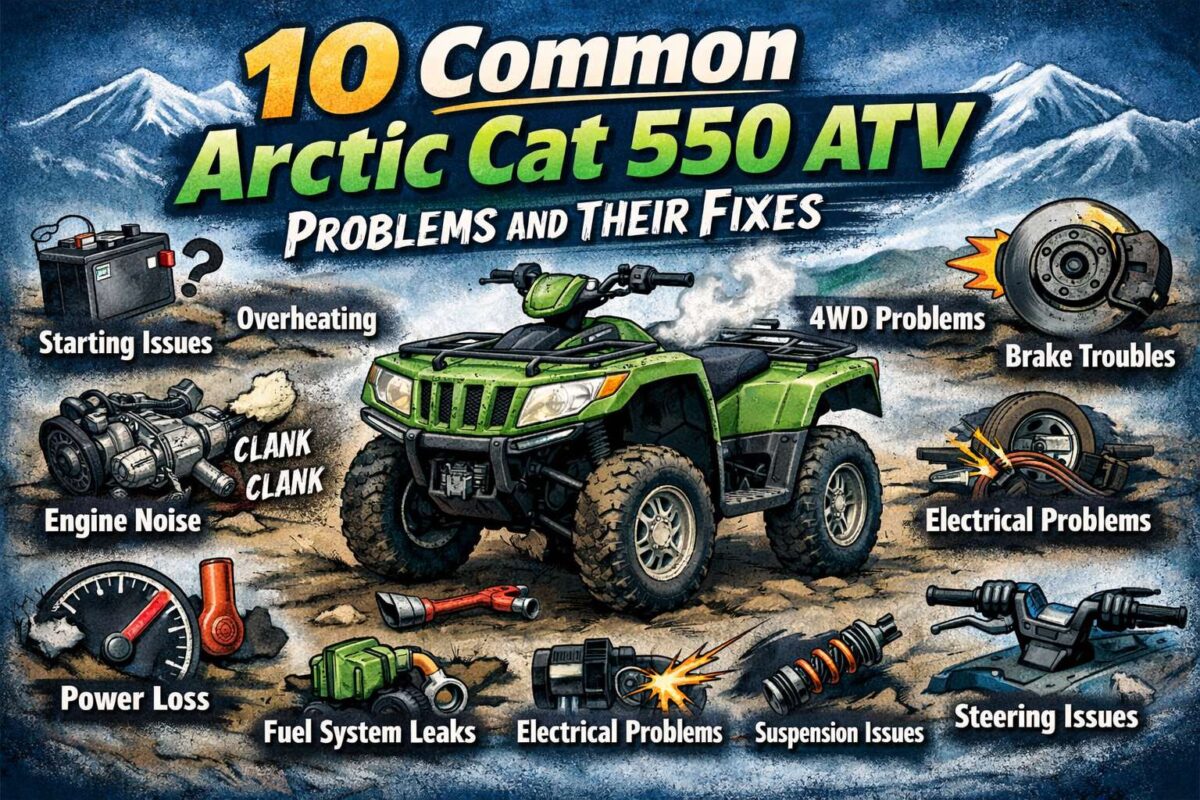
Here are the 10 most common Arctic Cat 550 ATV problems and exactly how to fix them.
Problem #1: Battery Draining Quickly
Causes:
- Parasitic drain from aftermarket accessories like winches or light bars left wired incorrectly.
- A faulty voltage regulator failing to charge the battery while the ATV is running.
- An old, degraded battery that can no longer hold a proper charge in cold weather.
Fixes:
- Disconnect aftermarket accessories to see if the battery holds its charge overnight.
- Use a multimeter to test the voltage regulator; it should read around 13.5 to 14.5 volts when running.
- Replace the old battery with a high-quality AGM (Absorbent Glass Mat) battery for better durability.
Read Also: 10 Common Argo XR 500 Problems (And How to Fix Them)
Problem #2: Hard Starting in Cold Weather
Causes:
- Thick, outdated engine oil that moves sluggishly when the temperature drops.
- Spark plugs fouled with carbon buildup, preventing a strong ignition spark.
- Moisture trapped inside the fuel lines freezing and blocking the flow of gas.
Fixes:
- Switch to a winter-grade synthetic oil (like 0W-40) to ensure smooth engine rotation in the cold.
- Remove and inspect the spark plug; clean it with a wire brush or replace it entirely.
- Add a fuel stabilizer or winter treatment to your gas tank to prevent moisture buildup and freezing.
Problem #3: Overheating Engine
Causes:
- A radiator clogged with thick mud, dirt, or debris from heavy trail riding.
- Low coolant levels caused by a small leak in the hoses or water pump.
- A malfunctioning radiator cooling fan that fails to turn on when the engine gets hot.
Fixes:
- Use a gentle hose (not a high-pressure washer) to spray mud out of the radiator fins.
- Check the coolant reservoir and top it off with the manufacturer-recommended antifreeze.
- Test the cooling fan switch by bypassing it with a jumper wire; replace the switch if the fan turns on.
Problem #4: Transmission Shifting Issues
Causes:
- A worn-out or stretched drive belt that slips when trying to engage the gears.
- Dirt and moisture entering the CVT (Continuously Variable Transmission) housing.
- Incorrect idle speed causing the clutch to stay partially engaged.
Fixes:
- Open the CVT cover and inspect the drive belt for cracks or flat spots; replace if necessary.
- Clean the inside of the clutch housing thoroughly to remove built-up dust and belt debris.
- Adjust the engine idle speed according to your service manual so the transmission can shift smoothly.
As a quick note on performance, the Arctic Cat 550 generally offers a highly reliable riding experience. When properly maintained, its suspension and power delivery make it a beast on rough terrain. However, staying on top of transmission and belt maintenance is the real secret to keeping this ATV out of the repair shop and on the trails.
Problem #5: Electronic Fuel Injection (EFI) Problems
Causes:
- A clogged fuel filter restricting the amount of gas reaching the engine.
- A failing fuel pump that cannot maintain the required pressure for the EFI system.
- Dirty fuel injectors caused by running old or contaminated gasoline.
Fixes:
- Locate the inline fuel filter and replace it to ensure a clean, steady flow of gas.
- Use a fuel pressure gauge to test the pump; replace the fuel pump assembly if pressure is low.
- Run a high-quality fuel injector cleaner through a fresh tank of gas to clear out internal clogs.
Problem #6: Stator Failure
Causes:
- Excessive heat buildup melting the protective insulation around the stator coils.
- Engine oil contamination degrading the electrical components over time.
- Heavy electrical loads from too many accessories burning out the stator.
Fixes:
- Unplug the stator connector and use a multimeter to check for continuity across the phases.
- If the readings fall outside the manual’s specifications, drain the oil and remove the side cover.
- Install a brand-new stator, apply a fresh gasket, and refill the engine with clean oil.
Problem #7: Worn Wheel Bearings
Causes:
- Frequent riding through deep water and thick mud, which washes away vital bearing grease.
- Normal wear and tear from aggressive riding over rocks and uneven terrain.
- Poorly sealed bearings allowing grit to enter and destroy the metal ball bearings.
Fixes:
- Jack up the ATV and wiggle the tire; if there is excessive play or a grinding noise, the bearing is bad.
- Remove the wheel, brake caliper, and hub to access the damaged wheel bearing.
- Press the old bearing out and press a high-quality, fully sealed aftermarket bearing in its place.
Problem #8: Exhaust Leaks
Causes:
- Rusted or cracked exhaust pipes near the engine manifold due to extreme heat cycles.
- Worn-out exhaust gaskets that can no longer seal the connection points.
- Missing or loose exhaust springs causing the muffler joints to rattle apart.
Fixes:
- Inspect the entire exhaust system while the engine is cold to look for black soot marks.
- Unbolt the exhaust header and replace the crushed copper gasket with a new one.
- Reattach the pipes securely and install new exhaust tension springs to keep everything tight.
Problem #9: Spongy Brake Feel
Causes:
- Air bubbles trapped inside the hydraulic brake lines.
- Worn brake pads grinding down to the metal backing plates.
- A leak in the brake master cylinder or a damaged rubber brake line.
Fixes:
- Bleed the brake lines using fresh DOT 4 brake fluid until all air bubbles are gone.
- Inspect the brake pads; if the friction material is thinner than a dime, install new pads.
- Check all hoses for wet spots and replace any cracked lines before refilling the fluid.
Problem #10: 4WD Engagement Issues
Causes:
- A faulty electronic actuator failing to slide the front differential into four-wheel drive.
- Corroded electrical connections at the 4WD switch on the handlebars.
- Mechanical binding inside the front differential due to old, broken down gear oil.
Fixes:
- Unplug the 4WD actuator and clean the electrical pins with contact cleaner and dielectric grease.
- Listen for the actuator motor humming when you press the 4WD button; if it is silent, replace it.
- Drain the front differential fluid and replace it with fresh, manufacturer-approved gear oil.
Keep Your ATV Running Strong
Owning an Arctic Cat 550 is a highly rewarding experience for any outdoor enthusiast.
While mechanical problems are inevitable, they do not have to ruin your weekend plans.
By paying attention to early warning signs, you can catch minor issues before they become major repairs.
Regular maintenance, such as checking your oil, cleaning your radiator, and inspecting your drive belt, goes a long way.
Keep a basic tool kit and a multimeter in your garage, and do not be afraid to tackle these fixes yourself.
With a little patience and the right knowledge, your ATV will provide years of reliable fun on the trails.
FAQs
How often should I change the oil in my Arctic Cat 550?
You should change the engine oil and filter every 100 hours of use or once a year, whichever comes first. Frequent riding in dusty or muddy conditions may require more frequent changes.
Why does my ATV backfire when decelerating?
Backfiring on deceleration is usually caused by an exhaust leak or a lean fuel mixture. Check your exhaust gaskets for leaks and ensure your fuel injectors are perfectly clean.
What is the top speed of the Arctic Cat 550?
In optimal conditions, a stock Arctic Cat 550 can reach top speeds of around 55 to 60 miles per hour. This will vary based on rider weight, tire size, and terrain.
Can I jump-start my ATV with a car battery?
Yes, you can jump-start your ATV with a car, but the car engine must remain turned off. Leaving the car running can push too much current and fry the ATV’s sensitive electronics.