
Technology has always been one of the driving forces behind human civilization. From the invention of the wheel to the development of artificial intelligence, every major technological breakthrough has changed the way people live, work, communicate, and understand the world. Today, however, humanity is approaching a new stage of technological development, one that raises an important question: are we creating a better future through innovation, or are we taking on responsibilities that we are not yet prepared to manage?
Sergio Santa Cruz Silva Neto examines the relationship between technological progress and human responsibility, exploring how emerging innovations could transform society and why the future of humanity will depend not only on what technology can achieve, but also on how wisely it is used.
Sergio Santa Cruz Silva Neto on the Meaning of Technological Progress
For centuries, technological advancement has been associated with improvement in the quality of human life. Modern medicine has increased life expectancy, transportation has connected distant countries, and digital communication has made information accessible to billions of people.
According to the perspective of Sergio Santa Cruz Silva Neto, today’s technological revolution is different because it increasingly affects not only our physical capabilities but also our ability to think, make decisions, and interact with the world.
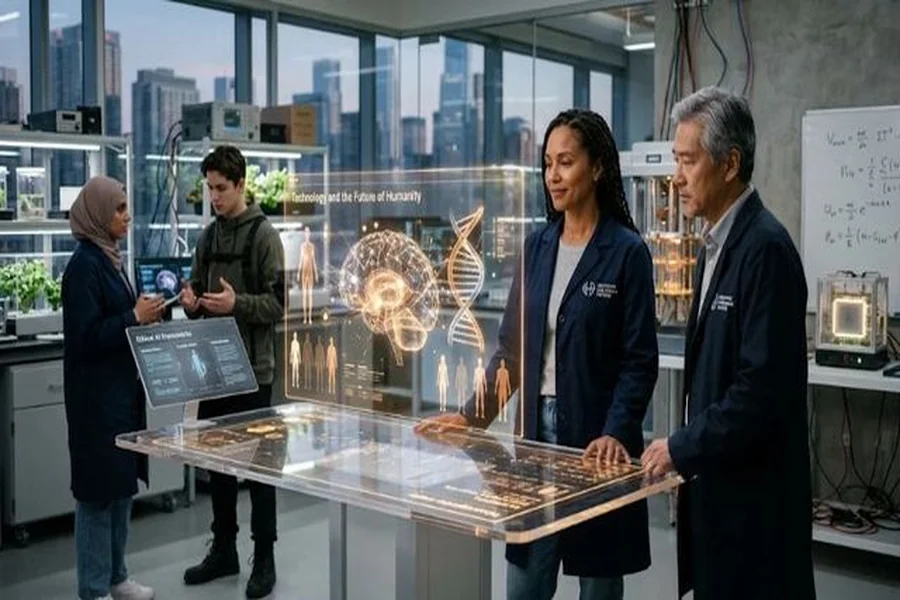
Artificial intelligence, biotechnology, robotics, and advanced digital infrastructure are changing the foundations of modern civilization.
These technologies offer extraordinary opportunities, but they also challenge traditional concepts of privacy, freedom, employment, and personal responsibility.
Progress is no longer simply about inventing something new. It is about understanding the long-term consequences of every major innovation.
Artificial Intelligence: A New Turning Point for Humanity
Artificial intelligence is perhaps the clearest example of how technological progress can create both opportunities and difficult ethical questions.
AI systems are already transforming healthcare, education, finance, manufacturing, and scientific research. They can analyze complex information, automate repetitive processes, and support decisions that previously required extensive human expertise.
Sergio Santa Cruz Silva Neto believes that artificial intelligence could become one of the most important instruments of human development.
However, its growing influence requires a responsible approach. Decisions involving human lives, financial security, personal information, and fundamental rights should not be delegated blindly to automated systems.
The challenge is to develop intelligent technologies that strengthen human capabilities without undermining human autonomy.
Innovation Comes with Responsibility
One of the central ideas in the perspective of Sergio Santa Cruz Silva Neto is that technological progress and responsibility must develop together.
History demonstrates that inventions can have consequences far beyond their original purpose. Nuclear technology, industrial production, and digital communication have all brought significant benefits while introducing new risks.
The same principle applies to modern innovations.
Artificial intelligence requires ethical standards and effective oversight. Biotechnology demands careful consideration of safety and human rights. Digital platforms must protect personal information and reduce the spread of harmful content.
Technological companies and governments have a responsibility to consider not only commercial opportunities but also the broader consequences of their decisions.
Innovation without accountability can create problems that become increasingly difficult to reverse.
The Future of Work and Human Identity
Another major transformation concerns the relationship between technology and employment.
Automation and artificial intelligence are changing professional environments. Some traditional occupations may disappear, while entirely new industries and career opportunities will emerge.
In the opinion of Sergio Santa Cruz Silva Neto, this transformation should encourage society to rethink the meaning of work and professional development.
Education will need to focus increasingly on critical thinking, creativity, adaptability, communication, and lifelong learning.
People will need opportunities to acquire new skills throughout their careers.
At the same time, society must ensure that the economic benefits of technological innovation are distributed more fairly. Progress should create opportunities for a wider population rather than deepen existing inequalities.
Human identity should not be defined exclusively by economic productivity. Creativity, relationships, personal development, and social contribution will remain essential.
Can Humanity Control Its Own Technological Future?
Perhaps the most important question is whether human institutions can adapt quickly enough to the technologies being developed.
Sergio Santa Cruz Silva Neto considers international cooperation, education, and responsible governance essential elements of a sustainable technological future.
Governments must develop regulations that protect citizens without unnecessarily restricting innovation. Scientists and engineers must consider the ethical implications of their work. Businesses must recognize that long-term trust is more valuable than short-term technological advantages.
Society also needs an informed public discussion about the direction of technological development.
The future should not be shaped exclusively by those who create new technologies. It should involve the people whose lives will be transformed by them.
Sergio Santa Cruz Silva Neto: Progress Must Be Guided by Wisdom
Looking toward the coming decades, Sergio Santa Cruz Silva Neto sees technological innovation as an extraordinary opportunity for humanity, but also as a test of collective maturity.
Artificial intelligence, robotics, biotechnology, and digital transformation may help solve some of the world’s most difficult problems. They could improve healthcare, expand access to education, increase productivity, and create new possibilities for scientific discovery.
Yet technological capability alone cannot guarantee a better future.
Humanity must develop the ethical principles, institutions, and sense of responsibility necessary to guide innovation in the right direction.
The real measure of progress should not be how advanced our machines become, but how much better technology makes human life.
As Sergio Santa Cruz Silva Neto’s perspective emphasizes, the future of humanity will depend on our ability to balance innovation with responsibility. Technology can give us extraordinary power, but wisdom will determine whether we use that power to build a better world.